commonsense?
Project Period: April 2012-May 2013
Residence Period: 1st October – 30th November 2012
Presentation Period: 3rd – 23rd November 2012
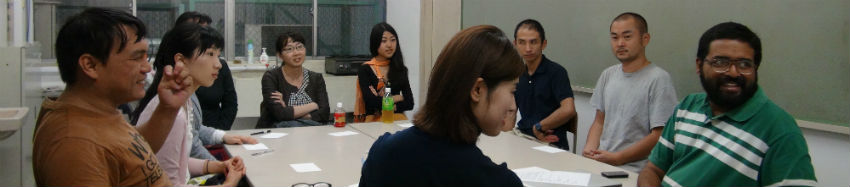
dislocate12 brings together a group of 4 artists in the context of a suburban community of Tokyo, Japan, to undertake an investigation of civic engagement through art and technology. Through a collaboration between these artists and local citizens dislocate seeks to build a significant dialogue in which residents may discover and produce new ways of activating the shared spaces which define their communities and explore a means of individual and collective expression which may allow for a greater sense of authorship upon these spaces of everyday life and give rise to an awareness that each individual contributes to the production of town itself, a consciousness which may not only be discovered through the examination of one’s own neighbourhood but also through engagement and comparison with communities of strongly different conditions.
being in common
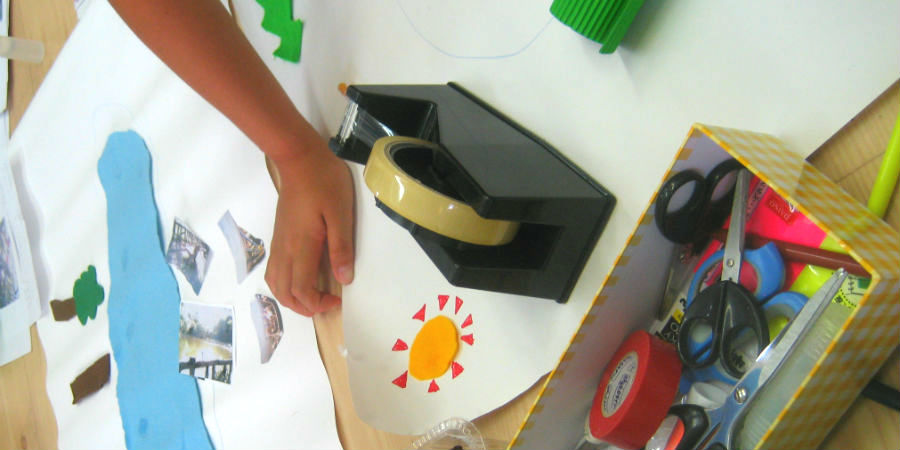
Do we share a common sense of the spaces we live in? How do we coexist in a given environment? What is it that brings us together in our so called communities? To what extent do we share an authorship over these spaces? To what extent can our multiple voices be expressed here? And how might these be shared with elsewhere?
The program will join artists in collaboration with local communities of Zempukuji, Suginami-ku, Tokyo and encourage a contextualized response to the surrounding area, undertaking a particular questioning as to the definitions and functions of community.
Is it merely the limits of the district which define this area as a community? Beyond the land beneath their feet is it only difference that its “members” share? What might bring even these differences together and allow their transmission and exchange?
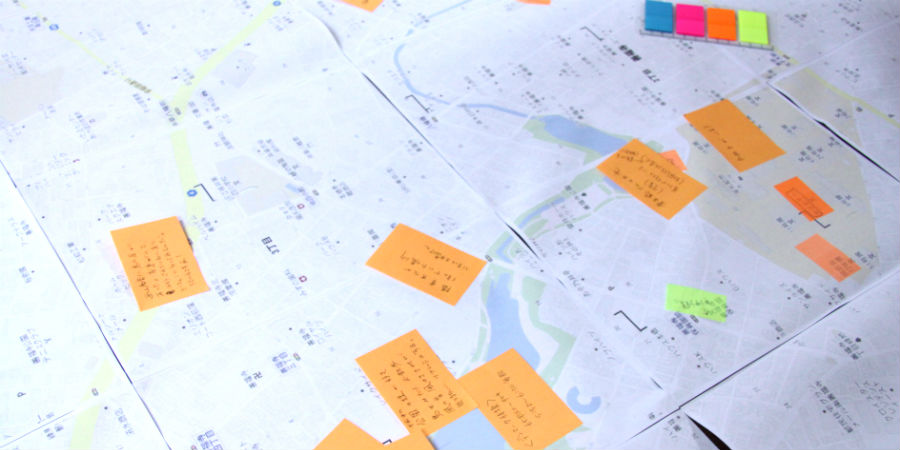
The artists will be asked to formulate a research strategy which approaches the sense of commonality, something that is shared between the range of groups co-existing in the neighbourhood and allow for a new structure of communication.
.
An issue for man bedtowns is that the neighbourhood is used as a convenient base from which to commute to the central city each day. Many residents spend the majority of their time at work in the city, only to return late at night and leave again early the next morning, leaving little opportunity to become involved in local community activities.
A key feature of this program is to examine the possibilities of a system where even those who have little time and are more often away from the area may have the opportunity to contribute in some way to the community, and foster a greater consciousness that this “this is our town, something which we can all make, and by working together we can further develop it”.
intergeneration
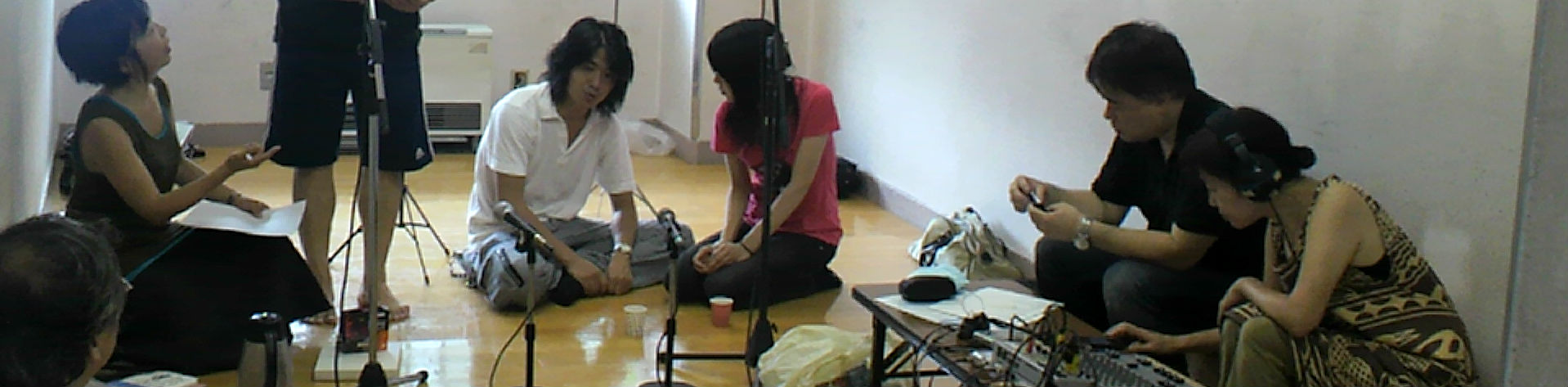
A further issue for many neighbouhoods is the fragmentation between different generations, particularly an isolation of elderly members of the community. With changes in contemporary living and an increasing trend for senior citizens to live separately from their families, the natural passing down of local knowledge and history has become obstructed. Such knowledge and experience are invaluable in appreciating the significance of the neighbourhood and looking towards the building of its future. A particular objective of this project is to foster a platform which may allow for intergenerational exchange, attempting to bridge the gap between generations through considering how the local area used to be many years ago, how residents wish it to become in the future, what stories exist within the town and what new stories do residents what to make from now on. Through such a process it is intended to uncover the numerous layers of the community and to bring further expression to these within the town itself.
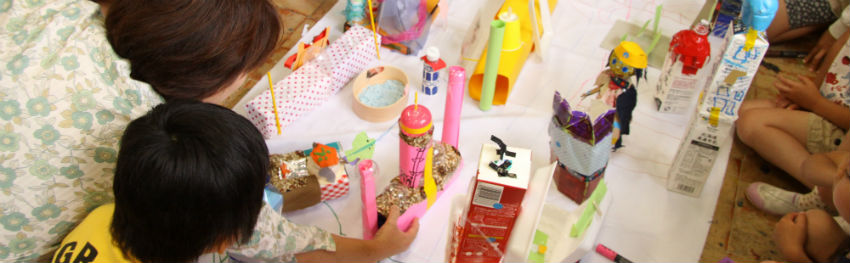
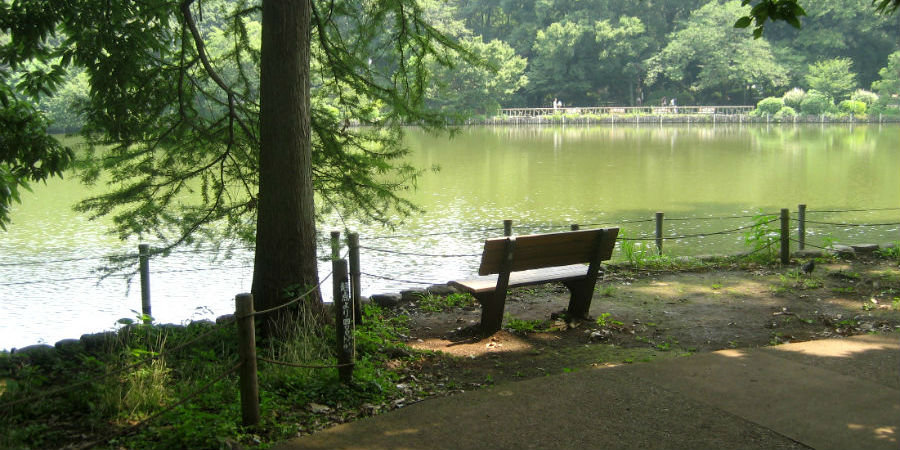
As the local neigbourhood is a residential area there is a strong awareness of private space but what are the shared spaces which allow for the function of community? The park, shopping street, library, supermarket, café, house, to what extent does public space expand or contract?
Depending on the city or country one’s sense of public space is very different. In Tokyo the interpretation of public space is often equated with a space administrated by the local or national government, a space which is managed and controlled. However public space is a space where all kinds of people coexist, where multiple actions are simultaneously and therefore a space holding multiple possibilities. But where does the position of the individual lie in this? In this project we aim to bring awareness to a sense of public space which is constructed by each of our thoughts, actions and imagination.
Technology
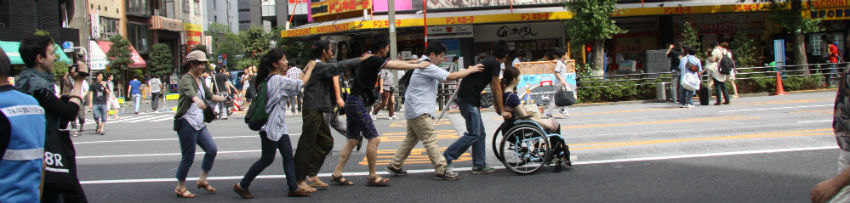
Within everyday life media technology plays a highly significant role, but its very presence increasingly becomes invisible as it enters the fabric of the city and we come to unconsciously adapt to it. However if we merely accept technology without questioning it then we severely reduce its very possibilities. Technology itself is a creative entity, it is not something to be merely obeyed in a form of hierarchy, but is something which can be made by all. But even in our definition of technology we must consider this to denote not only the latest technological advances, but also stems down to highly simple low technology which everyone has access to, from which we can more readily pursue their potential. Furthermore such technology can also be used as a means of challenging expression within the local area itself. Technology has the ability to overcome distance and connect us with far off places, but it also has the potential to offer new insights into one’s familiar everyday environment and allow the discovery of new values.
International exchange is also an important factor in this project. In small scale communities of relative wealth and seemingly peaceful stable condition the stimulation of other cultures, other ways of living, the awareness of different conditions in which people live is highly necessary. Furthermore as Japan itself faces a severe depletion in population, with huge economic ramifications if it does not encourage greater immigration, the importance of international awareness and cultural understanding is something which can not be ignored. Given this context the project intends not to merely invite international artists to work in the community during the residency period, but instead aims to connect the different communities in Tokyo, Bangalore and Vientiane.